
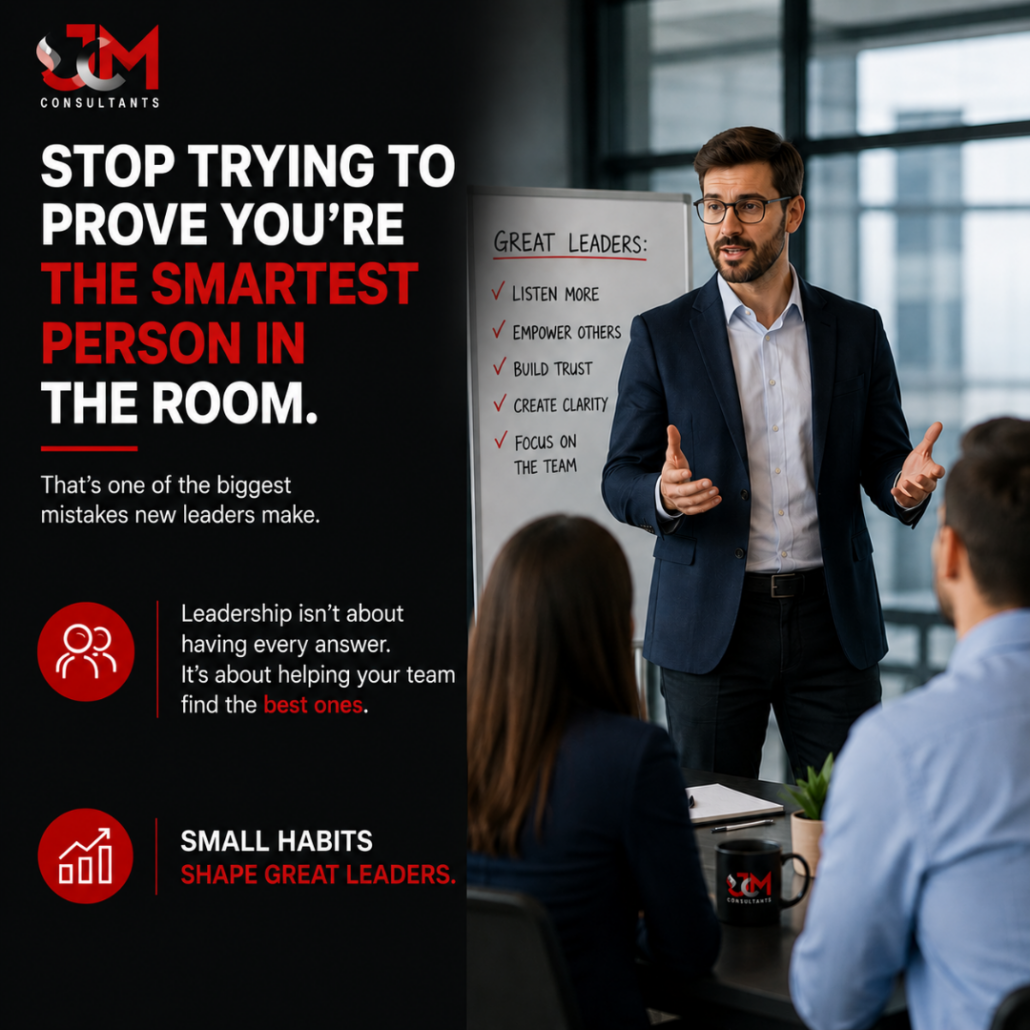
Stop Trying to Be the Smartest Person in the Room
Stepping into a leadership role often comes with pressure. Many new leaders feel they need to have every answer, solve every problem, and prove they deserve their position. While that mindset may seem like confidence, it can actually become one of the biggest obstacles to effective leadership.
The truth is, leadership isn’t about being the smartest person in the room. It’s about creating an environment where everyone feels confident to contribute, collaborate, and succeed.
The most successful leaders understand that their role isn’t to know everything—it’s to bring out the best in others.When leaders encourage different perspectives, ask thoughtful questions, and trust their teams, they unlock better ideas and stronger results. A team where everyone feels heard will almost always outperform one where every decision depends on a single person.
Leadership is less about having all the answers and more about helping others find them.
Many leaders unintentionally limit their team’s potential by:
• Solving every problem themselves.
• Avoiding difficult conversations.
• Micromanaging instead of trusting their people.
• Leading without a clear vision.
These habits may provide short-term control, but they often reduce creativity, confidence, and accountability within a team.
Small Habits Make a Big Difference and great leadership is built through consistent daily habits.
Successful leaders:
👂 Listen more than they speak.
🤝 Build trust through transparency.
💡 Encourage ideas from every team member.
🌱 Coach and develop people instead of controlling them.
🎯 Provide clear direction while giving others the freedom to succeed.
These small actions create a workplace where employees feel valued, motivated, and empowered to perform at their best.
Leadership Is About Growth The strongest leaders don’t create followers—they create more leaders.
When you invest in your team, encourage collaboration, and celebrate the success of others, everyone benefits. Your role as a leader isn’t measured by how much you know, but by how much your team grows because of your leadership.
The next time you’re in a meeting, resist the urge to have all the answers. Ask a question instead. Listen carefully. Give someone else the opportunity to contribute. You may discover that the best solution wasn’t yours—and that’s exactly what great leadership looks like.
One of the biggest misconceptions about leadership is that great leaders always have the right answers. In reality, the most effective leaders understand that their greatest strength lies in bringing out the best in the people around them. Leadership isn’t about proving your intelligence or solving every problem yourself—it’s about creating an environment where others feel empowered to contribute, share ideas, and grow. When leaders listen more than they speak, encourage collaboration, and trust their teams to take ownership, they build stronger relationships and achieve better results.
Teams thrive when people feel heard, respected, and supported, and that culture starts with the leader. Instead of trying to be the smartest person in the room, focus on asking better questions, developing the people around you, and creating opportunities for others to succeed. The most respected leaders aren’t remembered because they had all the answers—they’re remembered because they inspired confidence, encouraged growth, and helped others reach their full potential. Leadership is built through small, consistent actions every day, and those habits are what ultimately shape exceptional leaders.


Leave a Reply
Want to join the discussion?Feel free to contribute!