
Stop Trying to Be the Smartest Person in the Room

Stepping into a leadership role often comes with pressure. Many new leaders feel they need to have every answer, solve every problem, and prove they deserve their position. While that mindset may seem like confidence, it can actually become one of the biggest obstacles to effective leadership.

The truth is, leadership isn’t about being the smartest person in the room. It’s about creating an environment where everyone feels confident to contribute, collaborate, and succeed.

The most successful leaders understand that their role isn’t to know everything—it’s to bring out the best in others.When leaders encourage different perspectives, ask thoughtful questions, and trust their teams, they unlock better ideas and stronger results. A team where everyone feels heard will almost always outperform one where every decision depends on a single person.
Leadership is less about having all the answers and more about helping others find them.

Many leaders unintentionally limit their team’s potential by:
• Solving every problem themselves.
• Avoiding difficult conversations.
• Micromanaging instead of trusting their people.
• Leading without a clear vision.

These habits may provide short-term control, but they often reduce creativity, confidence, and accountability within a team.
Small Habits Make a Big Difference and great leadership is built through consistent daily habits.

Successful leaders:
👂 Listen more than they speak.
🤝 Build trust through transparency.
💡 Encourage ideas from every team member.
🌱 Coach and develop people instead of controlling them.
🎯 Provide clear direction while giving others the freedom to succeed.

These small actions create a workplace where employees feel valued, motivated, and empowered to perform at their best.
Leadership Is About Growth The strongest leaders don’t create followers—they create more leaders.
When you invest in your team, encourage collaboration, and celebrate the success of others, everyone benefits. Your role as a leader isn’t measured by how much you know, but by how much your team grows because of your leadership.

The next time you’re in a meeting, resist the urge to have all the answers. Ask a question instead. Listen carefully. Give someone else the opportunity to contribute. You may discover that the best solution wasn’t yours—and that’s exactly what great leadership looks like.

One of the biggest misconceptions about leadership is that great leaders always have the right answers. In reality, the most effective leaders understand that their greatest strength lies in bringing out the best in the people around them. Leadership isn’t about proving your intelligence or solving every problem yourself—it’s about creating an environment where others feel empowered to contribute, share ideas, and grow. When leaders listen more than they speak, encourage collaboration, and trust their teams to take ownership, they build stronger relationships and achieve better results.

Teams thrive when people feel heard, respected, and supported, and that culture starts with the leader. Instead of trying to be the smartest person in the room, focus on asking better questions, developing the people around you, and creating opportunities for others to succeed. The most respected leaders aren’t remembered because they had all the answers—they’re remembered because they inspired confidence, encouraged growth, and helped others reach their full potential. Leadership is built through small, consistent actions every day, and those habits are what ultimately shape exceptional leaders.
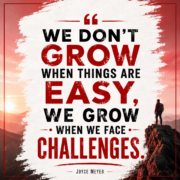

 

Why Challenges Are Essential for Career Growth

“We don’t grow when things are easy, we grow when we face challenges.”
— Joyce Meyer

Success is rarely built in moments of comfort.

While it’s natural to seek stability and routine, meaningful personal and professional growth often happens when we’re pushed beyond what feels familiar. Whether it’s taking on a difficult project, stepping into a leadership role, changing careers, or learning a new skill, challenges have a way of revealing strengths we didn’t know we had.

Growth Happens Outside Your Comfort Zone

Psychologist Carol Dweck’s research on the growth mindset shows that people who believe their abilities can be developed through effort and learning are more likely to embrace challenges, persist through setbacks, and achieve long-term success.

Instead of viewing obstacles as signs of failure, they see them as opportunities to improve. This shift in perspective can make all the difference.

The Numbers Support It

According to the World Economic Forum’s Future of Jobs Report 2025, employers increasingly value skills such as analytical thinking, resilience, flexibility, problem-solving, and continuous learning. These aren’t abilities developed through routine—they’re built by overcoming challenges and adapting to change.

Similarly, research from LinkedIn’s Workplace Learning Report consistently shows that professionals who actively seek new challenges and invest in continuous learning are more likely to advance in their careers and remain competitive in a rapidly evolving job market.

Every Challenge Builds Something – When you face a challenge, you’re developing far more than technical knowledge.

You’re building:

  • Resilience to recover from setbacks.
  • Confidence by proving to yourself that you can overcome obstacles.
  • Problem-solving skills through real-world experience.
  • Adaptability, one of today’s most valuable workplace skills.
  • Leadership qualities that emerge when navigating uncertainty.

These are the qualities employers look for when promoting high-performing professionals.

Reframing Difficult Moments

The next time you’re faced with a difficult project or an unexpected setback, ask yourself:

  • What can I learn from this?
  • Which skill is this helping me develop?
  • How will this experience prepare me for future opportunities?

Often, the challenges we resist become the experiences we’re most grateful for later in our careers.

Keep Moving Forward

Growth doesn’t happen overnight, and it certainly doesn’t happen without effort. Every obstacle you overcome adds to your experience, strengthens your character, and prepares you for greater opportunities.

Embrace the difficult conversations, the ambitious goals, and the moments that stretch your abilities. They may not be comfortable—but they are often the stepping stones to your greatest achievements.

At JCM Consultants, we believe careers are built through continuous learning, resilience, and a willingness to embrace new opportunities. Every challenge is another step toward becoming the professional you’re capable of being.


Positive Words, Positive Results: How Your Mindset Can Shape Your Career

“Say something positive, and you’ll see something positive.”
— Jim Thompson

It sounds simple, but science suggests there’s real truth behind these words.

The way we speak—to ourselves and to others—does more than influence our mood. It shapes how we approach challenges, build relationships, and perform at work. While positive thinking isn’t about ignoring problems, developing a constructive mindset can help us become more resilient, confident, and adaptable throughout our careers.

Your Words Influence Your Thinking

Every day, we have an internal conversation with ourselves. Whether you’re preparing for an interview, leading a meeting, or tackling a difficult project, the words you choose can either build confidence or create doubt.

Replacing thoughts like *”I can’t do this”* with *”I’ll figure this out”* doesn’t change the challenge—but it changes how you respond to it.

That small shift can be the difference between giving up and pushing forward.

Research in positive psychology has consistently found that employees who experience more positive emotions are often more engaged, motivated, and satisfied at work. Positive workplace cultures have also been linked to stronger collaboration, higher innovation, and improved overall performance.

Studies have also shown that optimism is associated with higher job satisfaction, greater workplace happiness, and stronger individual performance.

Perhaps most importantly, optimism isn’t simply something you’re born with. Positive psychology research suggests it can be learned and strengthened over time through consistent habits and intentional thinking.

Small Changes, Big Impact

Developing a positive mindset doesn’t require dramatic life changes.

Start with small, intentional habits:

* Replace negative self-talk with encouraging language.
* Celebrate progress instead of waiting for perfection.
* Focus on solutions rather than problems.
* Express appreciation to colleagues.
* View setbacks as opportunities to learn rather than reasons to quit.

These daily habits gradually shape the way you think—and ultimately, the way you perform.

Success Starts from Within – Career growth isn’t determined by qualifications alone. It’s also shaped by resilience, attitude, communication, and the mindset you bring to every opportunity.

Sometimes the smallest shift in perspective is the first step toward your biggest professional breakthrough.


5 Mindset Shifts That Can Transform Your Career

When people think about career growth, they often focus on earning another qualification, mastering a new skill, or expanding their professional network. While those things certainly matter, there’s one factor that influences every decision you make, every opportunity you pursue, and every challenge you overcome: **your mindset.**

The way you think shapes the way you perform. It determines whether you embrace challenges or avoid them, whether you see setbacks as failures or opportunities to learn, and whether you continue growing or become comfortable standing still.

The most successful professionals aren’t necessarily the smartest people in the room—they’re often the ones who continually adapt, learn, and choose perspectives that move them forward.

Here are five powerful mindset shifts that can help you unlock your full potential.

## 1. From “I have to” to “I get to”

It’s easy to see work as a list of obligations. Deadlines, meetings, projects, and responsibilities can quickly become things you *have* to do.

Instead, try shifting your perspective.

Every project is an opportunity to develop new skills. Every meeting is a chance to build relationships. Every challenge is another opportunity to demonstrate your value.

Gratitude doesn’t remove hard work—it changes the way you approach it. Professionals who appreciate opportunities often bring more enthusiasm, resilience, and positivity into everything they do.

## 2. From “I’m not ready” to “I’ll learn as I go”

Many talented professionals wait for the “perfect” moment before applying for a promotion, volunteering for a project, or accepting a leadership role.

The truth is, very few people ever feel completely ready.

Growth happens outside your comfort zone. Every new responsibility teaches you something that couldn’t be learned by waiting.

Confidence isn’t something you gain before taking action—it’s something you build by taking action.

Don’t wait until you know everything. Start where you are, remain curious, and trust yourself to grow along the way.

## 3. From “Failure is bad” to “Failure is feedback”

Nobody enjoys making mistakes, but avoiding them altogether usually means avoiding growth.

Every successful career includes setbacks. Interviews don’t always lead to offers. Projects don’t always go according to plan. Promotions sometimes go to someone else.

Rather than viewing these moments as failures, ask yourself:

* What did I learn?
* What can I improve next time?
* How can this experience make me stronger?

Feedback—whether positive or negative—is one of the fastest ways to improve. The professionals who continue growing are the ones who learn from every experience instead of allowing disappointment to define them.

## 4. From “This is good enough” to “How can I make it even better?”

Excellence isn’t about perfection—it’s about continuous improvement.

The best professionals constantly look for ways to refine their work, improve processes, and create greater value.

That doesn’t mean working longer hours or chasing perfection. It means remaining curious, asking thoughtful questions, and looking for opportunities to improve just a little every day.

Small improvements, repeated consistently over time, often create extraordinary results.

## 5. From “It’s all on me” to “I can ask for help”

Many people believe asking for help is a sign of weakness.

In reality, it’s often a sign of emotional intelligence and professional maturity.

The strongest professionals know they don’t have all the answers. They seek advice, ask questions, collaborate with teammates, and learn from mentors who have already walked the path they’re on.

Building a successful career isn’t a solo journey. The relationships you develop and the people you learn from often become some of your greatest professional assets.

## Your Mindset Shapes Your Future

Career growth isn’t determined by luck alone. It’s built through daily habits, consistent learning, and the perspectives you choose every day.

A single mindset shift won’t transform your career overnight, but small changes in how you think can completely change how you approach opportunities, overcome obstacles, and achieve your goals.

Invest in your mindset just as much as you invest in your skills.

Because when your thinking grows, your career has room to grow with it.

**At JCM Consultants, we believe great careers begin with the right opportunities—and the right mindset to make the most of them. Whether you’re searching for your next role or preparing for your next career move, we’re here to help you take that next step with confidence.**

Career Change at Any Age: Is It Ever Too Late?

More and more professionals are completely rewriting their career stories—not just once, but multiple times throughout their working lives. The traditional linear path is giving way to a dynamic, multidirectional journey.

What the Data Says

  • Active Consideration: Around 49% of professionals globally are actively considering a career change.

  • Proven Shifts: Studies show about 34% of people have already made at least one major career pivot in the past decade.

  • The New Normal: Globally, it’s estimated that most people will change careers at least once—with 3 to 7 career changes over a working life now becoming standard practice.

  • Open Horizons: In recent surveys, nearly 70% of workers state they are open to changing their career path entirely.

  • The Pivot Point: The average person makes their first major career change around age 30–31, with many continuing to iterate and pivot much later in life.

The South African Context: Pressure Meets Opportunity

In South Africa, macro-economic realities compress these global timelines, turning career agility from a choice into an absolute necessity:

  • Market Realities: High youth unemployment and economic volatility are pushing professionals toward “second careers” and strategic side hustles.

  • The Tech Velocity: Rapid digital transformation and technological shifts are drastically shrinking the half-life of professional skills.

  • The Reskilling Mandate: An urgent, localized demand for reskilling, upskilling, and pivoting into future-proof digital careers.

The Verdict: Career change is no longer a luxury or a high-stakes risk—it is a core survival and growth strategy.

The Real Questions to Ask Yourself

The question isn’t “Is it too late?” It’s:

  1. Are your current skills aligned with where the digital economy is actually going?

  2. Are you actively scaling your capability—or just staying comfortable?

  3. Do you want your next 10 years to look exactly like your last 10?

The Core Truth

Most professionals don’t pivot because they failed. They pivot because they outgrow their industry, demand better alignment with their life stage, discover new passions, or adapt to an economic reset.

Research consistently demonstrates something powerful: Strategic career mobility frequently leads to exponential upward movement when skills are transferred effectively.

Bottom Line: The Power of Non-Linear Capital

You are never truly “starting over.”

When you pivot, you aren’t resetting your progress to zero or discarding your past achievements. Instead, you are capturing a rich portfolio of non-linear capital—leveraging years of accumulated emotional intelligence, problem-solving frameworks, leadership perspective, and hard-earned industry insights, and shifting them into a new trajectory.

In a rapidly evolving global workforce, true professional security doesn’t come from sticking to one rigid job title for life; it comes from your ability to adapt, reinvent yourself, and successfully apply your unique background to new industries. Your diverse experience isn’t a disadvantage; it is your ultimate competitive edge. In today’s economy, that isn’t a risk—it is the modern standard for long-term success.

# Upskilling Your Workforce: Why Investing in Employees Pays Off

In today’s rapidly evolving workplace, standing still is no longer an option. Technology is advancing, industries are changing, and the skills required to succeed are constantly shifting. For businesses looking to remain competitive, one of the smartest investments they can make is in their people.

Upskilling – the process of helping employees develop new skills and enhance existing ones – is no longer just a “nice to have.” It has become a business necessity.

## Increased Employee Retention

Employees want to know that their employers are invested in their growth. Providing opportunities for learning and development demonstrates that you value your team and are committed to their long-term success. In return, employees are often more engaged, motivated, and loyal to the organisation.

Replacing staff can be both costly and time-consuming. By developing the talent you already have, you can reduce turnover and retain valuable institutional knowledge.

## Improved Productivity and Performance

When employees have the right skills, they are better equipped to perform their roles effectively. Whether it’s leadership training, technical development, or enhancing soft skills such as communication and problem-solving, upskilling empowers employees to work more efficiently and confidently.

As individuals grow, so does the overall performance of the business.

## Greater Adaptability in a Changing Market

The world of work is changing at an unprecedented pace. Organisations that prioritise continuous learning are better prepared to adapt to new technologies, shifting customer expectations, and evolving industry trends.

Upskilling creates a workforce that is resilient, agile, and ready to embrace change rather than resist it.

## Building Future Leaders

Leadership succession planning is essential for long-term business success. Investing in employee development helps identify high-potential individuals and equips them with the skills they need to step into leadership positions when opportunities arise.

Rather than always looking externally, organisations can cultivate their next generation of leaders from within.

## Strengthening Your Employer Brand

Companies known for investing in employee development often become employers of choice. Top talent is attracted to organisations that offer opportunities for growth, career progression, and ongoing learning.

A strong reputation as an employer that values its people can provide a significant advantage in a competitive hiring market.

## The Bottom Line

Training and development should not be viewed as an expense, but rather as an investment with measurable returns. Employees who feel supported in their professional growth are more engaged, productive, and committed to the success of the organisation.

The question is no longer whether businesses can afford to invest in their people – it’s whether they can afford not to.

At JCM Consultants, we understand that people are an organisation’s greatest asset. By prioritising development and nurturing talent, businesses can build stronger teams, drive innovation, and create a foundation for sustainable success.

Because when employees grow, businesses grow too.

Future-Proofing Your Growth: The Careers That Will Dominate the Next 10 Years

We’ve all heard the phrase “the future of work,” but the reality is that the future is already arriving in waves. Rapid technological integration, shifting global infrastructure, and evolving economic demands are completely reshaping what it means to build a sustainable career.

For professionals planning their next move and employers looking to secure a competitive edge, understanding where the market is moving over the next decade isn’t just an advantage—it’s a necessity.

Based on global hiring trajectories and industrial evolution, here are the core sectors and careers set to dominate the landscape over the next ten years.

1. The Data & Artificial Intelligence Revolution
Data is the new currency, and the architecture built around it will anchor the global economy. Over the next decade, organizations will move past simply “collecting” data to aggressively operationalizing it.

The Dominant Roles: Data Scientists, AI Prompt Engineers, Machine Learning Architects, and Data Governance Officers.

Why It Matters: Companies will need specialized talent to bridge the gap between complex algorithms and practical business strategy, ensuring data is used ethically, securely, and profitably.

2. Next-Generation Engineering & Advanced Infrastructure
As cities smarten up and heavy industries embrace digital transformation, the engineering sector is experiencing a massive tech-driven renaissance. The line between hardware and software is permanently blurring.

The Dominant Roles: Automation & Robotics Engineers, Cloud Infrastructure Engineers, Smart City Planners, and Renewable Energy Technologists.

Why It Matters: From modern mining operations to heavy construction, the demand for specialists who can integrate IoT (Internet of Things) devices and sustainable energy solutions into physical infrastructure will skyrocket.

3. Cyber Security & Enterprise Resilience
As platforms scale, risk scales with them. With massive migrations to cloud ecosystems and ERP enterprise tools (like Microsoft Dynamics 365), protecting corporate assets and digital infrastructure is a permanent boardroom priority.

The Dominant Roles: Cloud Security Architects, Penetration Testers, DevSecOps Engineers, and Enterprise Risk Managers.

Why It Matters: A single security breach can devastate a business. The professionals who can stay one step ahead of evolving digital threats will remain among the highest-paid and most sought-after talent on earth.

4. Fintech, Banking & Digital Assets
The traditional financial sector is entirely transforming into a tech-first ecosystem. Banking is no longer just about managing wealth; it’s about creating seamless, secure, and hyper-personalized digital financial experiences.

The Dominant Roles: FinTech Product Managers, Blockchain Developers, Quantitative Risk Analysts, and Financial Compliance Specialists.

Why It Matters: As cross-border transactions accelerate and digital banking becomes the absolute baseline, the intersection of finance, data science, and software engineering will be an elite career hotspot.

5. Change Management & Digital Transformation Leadership
Technology is only as good as the people using it. As heavy industries—from construction to mining—undergo massive tech overhauls, the human element of technology adoption has become a critical bottleneck.

The Dominant Roles: Digital Transformation Programme Managers, Change Management Specialists, and Agile Delivery Leads.

Why It Matters: Organizations will face continuous implementation cycles. Leaders who possess the rare combination of deep technical literacy and exceptional human stakeholder management will be indispensable.

The next ten years won’t just demand new job titles; they will demand a new mindset. The most successful professionals will be those who embrace continuous upskilling, and the most successful companies will be those that recruit for adaptability and technical excellence.


The future belongs to those who prepare for it today.

The Growing Demand for Skilled Trades in South Africa

For years, university degrees were often seen as the primary path to career success. But across South Africa — and globally — skilled trades are becoming some of the most valuable and in-demand professions in today’s job market.

Electricians, technicians, artisans, welders, fitters, mechanics, and infrastructure specialists are playing an increasingly critical role in supporting economic growth, industrial development, renewable energy projects, construction, manufacturing, and essential services. As industries continue to evolve, the shortage of qualified skilled workers is becoming more noticeable.

Many employers are now struggling to fill technical and trade-based positions due to a lack of experienced candidates entering the workforce. This growing skills gap is creating strong career opportunities for individuals with practical training, certifications, and hands-on experience.

In South Africa, sectors such as energy, mining, construction, logistics, engineering, and manufacturing continue to rely heavily on skilled trades professionals. With infrastructure development and maintenance remaining essential priorities, demand for these roles is expected to continue rising over the coming years.

One of the biggest advantages of pursuing a skilled trade is long-term career stability. While many industries are rapidly changing due to automation and AI, many technical and hands-on roles remain difficult to replace. Skilled trades often offer competitive salaries, opportunities for growth, and the ability to work both locally and internationally.

For young professionals and job seekers considering their career paths, skilled trades should no longer be viewed as a “second option.” They are becoming some of the most future-proof and respected careers in the modern workforce.


9 Leadership Lies Holding You Back

Great leadership is not about being perfect — it’s about being effective. Yet many professionals still believe outdated leadership ideas that can limit growth, damage team culture, and reduce performance. Here are nine common leadership myths that may be holding you back, and what strong leaders do instead.

1. “Leaders need to have all the answers.”

The best leaders ask thoughtful questions, seek feedback, and surround themselves with talented people. Leadership is about learning, not pretending to know everything.

2. “A full calendar means you’re productive.”

Being busy does not always equal progress. Strong leaders focus on impact, priorities, and meaningful results rather than constant activity.

3. “Leadership is about authority and control.”

True leadership is built on influence, trust, and empowerment — not micromanagement. Great leaders help others succeed.

4. “Vulnerability makes you weak.”

Authenticity builds trust. Leaders who are honest about challenges often create stronger connections with their teams.

5. “Good leaders never fail.”

Failure is part of growth. Effective leaders learn from mistakes and use setbacks as opportunities to improve.

6. “Micromanaging prevents mistakes.”

Micromanagement often reduces creativity, morale, and productivity. Hiring capable people and trusting them is far more effective.

7. “Charisma makes a great leader.”

Leadership is not about being the loudest person in the room. Consistency, integrity, and reliability matter more than personality alone.

8. “Leadership is a solo journey.”

Strong leaders build support systems, collaborate, and know when to ask for help.

9. “Hard skills matter more than soft skills.”

Technical expertise may open doors, but communication, emotional intelligence, and trust are what inspire people to follow great leaders.

The best leaders are always learning, adapting, and growing. Sometimes the biggest leadership breakthrough comes from unlearning the myths we once believed.

Beyond the Resume: How to Turn Your LinkedIn Profile into a Career Magnet

LinkedIn is no longer just a repository for your work history. Today, it stands as one of the most powerful tools available for professional visibility, networking, and career advancement. On any given day, recruiters, hiring managers, and industry decision-makers are actively utilizing the platform to source fresh talent and vet potential candidates.

If your profile is outdated or unoptimized, you aren’t just invisible—you are actively missing out on inbound opportunities.

Fortunately, turning your profile into a passive lead generator for your career doesn’t require a total overhaul. Here are six high-impact adjustments you can make to optimize your presence starting today.

1. Invest in a Clear, Professional Photo
Your profile picture is the literal face of your personal brand. Avoid cropped group photos, low-resolution selfies, or outdated images. Opt for a high-quality, well-lit headshot where you look approachable and professional.

2. Craft a Value-Driven Headline
Most people default to letting LinkedIn list their current job title as their headline. Instead, use this prime real estate to explain the exact value you bring to your industry.

Instead of: “Marketing Manager”

Try: “Marketing Manager | Helping B2B Tech Brands Scale Organic Traffic & Drive Pipeline”

3. Tell Your Story in the Summary
The “About” section shouldn’t read like a dry cover letter. Write it in the first person and use it to showcase your professional identity. Highlight your core competencies, your biggest career achievements, and what drives your passion for the industry.

4. Focus on Achievements Over Responsibilities
When filling out your experience section, avoid simply copying and pasting your official job description. Employers want to see outcomes, not tasks. Frame your bullet points around tangible achievements, quantifiable data, and the direct impact of your work.

5. Optimize for Search Keywords
Recruiters use specific search strings to find candidates. Research the job descriptions of roles you want, identify the recurring skills and tools mentioned, and strategically weave those industry keywords into your skills section, headline, and job descriptions.

6. Transition From Consumer to Contributor
An optimized profile only works if people see it. Stay top-of-mind by engaging with the platform. You don’t have to write long-form articles daily; simply commenting thoughtfully on industry news, sharing insightful posts, and celebrating your network’s milestones will drastically increase your visibility.

The Bottom Line
Ultimately, your LinkedIn profile is your personal brand’s digital storefront. When built correctly, it acts as a passive asset that works on your behalf, opening doors and creating connections even when you are offline.

Take 10 minutes out of your day to review these six areas. A few small refinements today could be the catalyst for your next major career breakthrough.